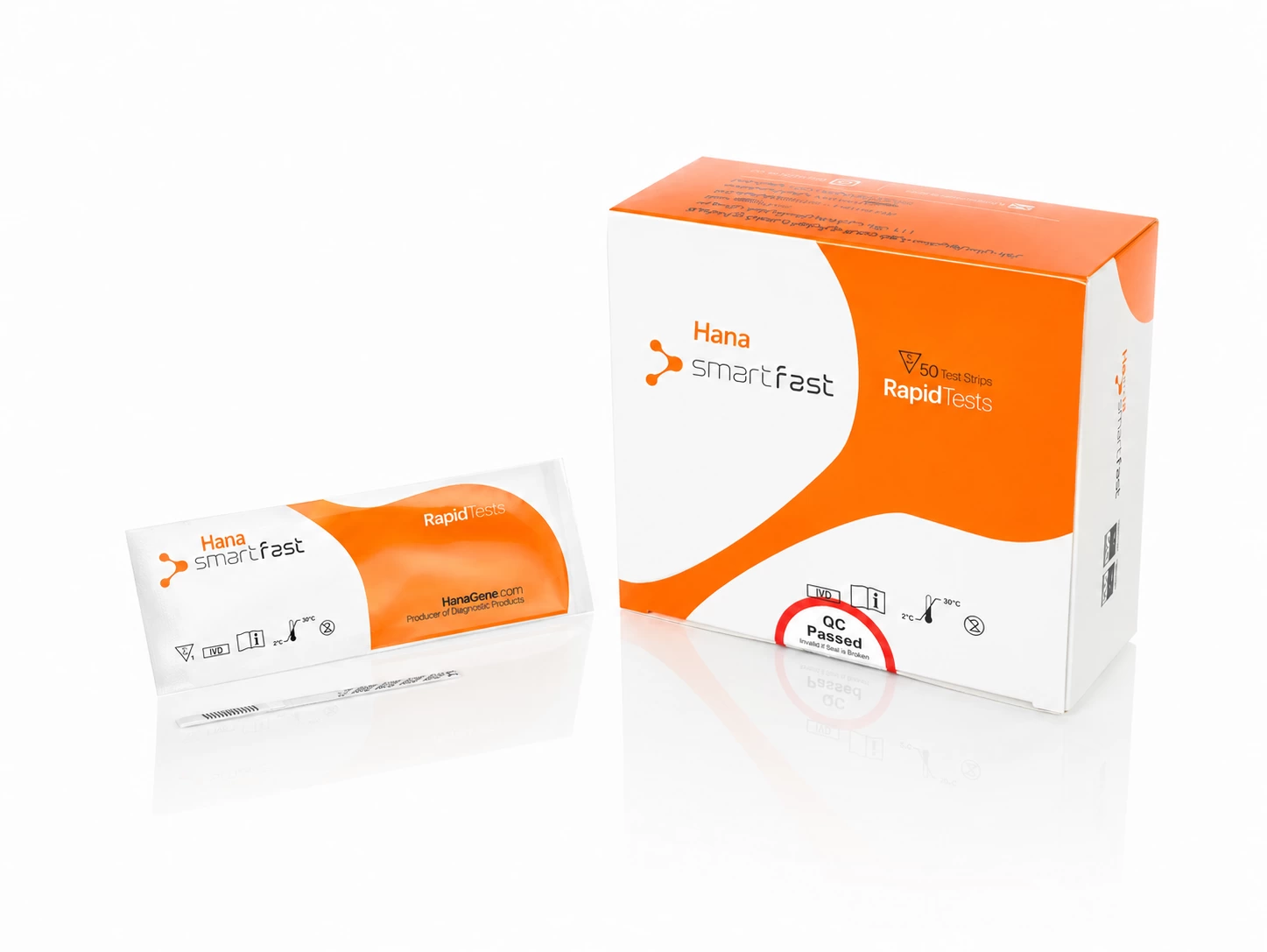
The MOP Rapid Test Dipstick (Urine) is a Rapid chromatographic immunoassay for qualitative detection of Morphine in human urine at a cut-off concentration of 300 ng/mL which is only utilized for in vitro diagnostics (IVD). It merely provides a preliminary result, therefore, an alternative method with more specificity is recommended to be used to confirm the initial results, in which case, the most preferred method is gas chromatography-mass spectrometry (GC-MS).
Summary
Morphine is a strong narcotic causing pain relief by having an effect on the central nervous system. Morphine stops and reduces feelings of pain affecting the user’s nervous system. Its consumption causes symptoms such as relaxation, sleepiness, lower body temperature, pain relief, etc. Morphine injection is used to treat severe pain. The injection is subcutaneous, intramuscular, or intravenous, however, the intravenous method is performed only for people who have had a heart attack and are in great pain. The substance is highly addictive and so if the patient has Morphine injections for 2 or 3 times, addiction will develop, leading an individual to a severe physical and psychological need to continue taking it. The symptoms of Morphine addiction and its withdrawal start from around 6 to 8 hours after stopping the use, and reach their highest within 36 to 72 hours, and then during 7 to 10 days they gradually disappear. This test employs monoclonal antibodies for the selective detection of high levels of Morphine in the urine. Should the level be greater than 300 ng/mL, the test result will be positive.
- Function Method Basis
Rapid Morphine urine test employs an immunochromatographic method based on competitive binding. Substances that may be found in urine specimen compete with ones metabolized by the liver to bind to antibodies. During the test, the urine specimen flows upward via capillary action. If the amount of Morphine in the urine is below 300 ng/mL, it does not bind to the binding sites of the anti-Morphine antibodies conjugated with gold nanoparticles and binds to the coated antigen in the test area (T) and will leave a colored line there. So, if the presence of Morphine in the urine specimen is positive, no colored line will be formed in the test area (T) due to drug competition, whereas if the urine specimen contains Morphine amounts lower than the desired level in the test, a colored line will appear in this area. In order to have a procedural control, a colored line always appears in the area of the control line (C), indicating the appropriate volume of the specimen added to the membrane.
- Certain medications that may cause a false positive result
|
Antidepressant medications such as
Fluoxetine, Sertraline, Amitriptyline, and … |
|
Synthetic opioid medications such as
Methadone, Tramadol, and … |
|
Painkiller medications such as
Acetaminophen, Citalopram, Diazepam, Oxazepam, Atenolol, Acebutolol, Amiodarone, Amoxapine, Astemizole, Bisoprolol, Bromodiphenhydramine, Brompheniramine Maleate, Ritalin |
|
OTC Cold and Allergy Medications such as
Ephedrine, Pseudoephedrine, Phenylephrine |
|
OTC Anti-Obesity Medications such as
Phenyl, Propanol, Amine |
|
OTC Nasal Sprays Such as
Afrin |
|
Anti-Asthma Medications Such as
Marax |
|
Other Medications
Bupropion, Desipramine, Dextroamphetamine, Isoxsuprine, Labetalol, Ranitidine, Ritodrine, Selegiline, Trimipramine |
Certifications & Standards