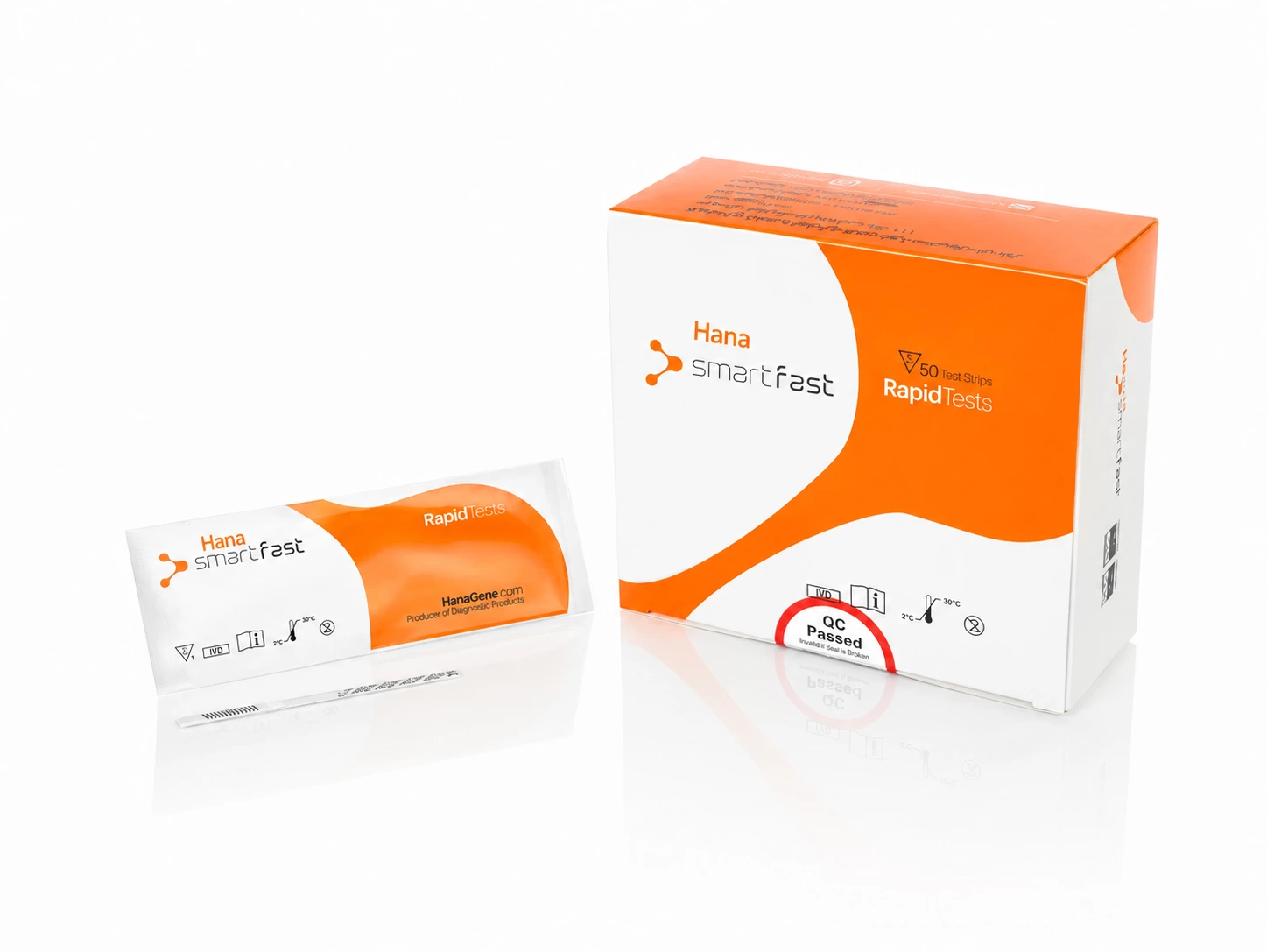
The TML Rapid Test Dipstick (Urine) is a Rapid chromatographic immunoassay for qualitative detection of Tramadol in human urine at a cut-off concentration of 100 ng/mL which is only utilized for in vitro diagnostics (IVD). It merely provides a preliminary result, therefore, an alternative method with more specificity is recommended to be used to confirm the initial results, in which case, the most preferred method is gas chromatography-mass spectrometry (GC-MS).
Summary
Tramadol is an opioid prescribed to relieve severe to moderate pain. Its mechanism of action is in two ways: firstly, like other opioids (opium derivatives), it is an agonist of Mu (μ) receptors. Secondly, it prevents the reabsorption of noradrenaline and serotonin, and increases the concentration of these two in the synapse; this creates a property like that of antidepressants as well as alertness, and unlike morphine, makes the user even more active. Frequent, prolonged use of Tramadol causes a tolerance to the drug and physiological dependence and eventually could lead to addiction. Tramadol is mainly metabolized after oral administration. 30% of it will be unchanged and 60% will be excreted through urine in the form of metabolites broken down in the liver. Tramadol ’s half-life in the serum is around 6 to 7 hours with a concentration of 0.1 to 0.3. Studies show that its concentration in the urine is more than in the serum, therefore urine specimens are more suitable to prove the consumption of the drug.
- Function Method Basis
Rapid Tramadol urine test employs an immunochromatographic method based on competitive binding. Substances that may be found in urine specimen compete with ones metabolized by the liver to bind to antibodies. During the test, the urine specimen flows upward via capillary action. If the amount of Tramadol in the urine is below 100 ng/mL, it does not bind to the binding sites of the antibodies coated with nanoparticles. Consequently, the antibody conjugated with nanoparticles will be absorbed by the Tramadol on the surface of the membrane and will leave a colored line in the test area (T). Should the amount be greater than 100 ng/mL, no colored line will appear in the T area, since all the binding sites of the Tramadol antibodies are occupied. So, if the presence of Tramadol in the urine specimen is positive, no colored line will be formed in the test area (T)due to drug competition, whereas if the urine specimen contains Tramadol amounts lower than the desired level in the test, a colored line will appear in this area. In order to have a procedural control, a colored line always appears in the area of the control line (C), indicating the appropriate volume of the specimen added to the membrane.
- Certain medications that may cause a false positive result
Certifications & Standards