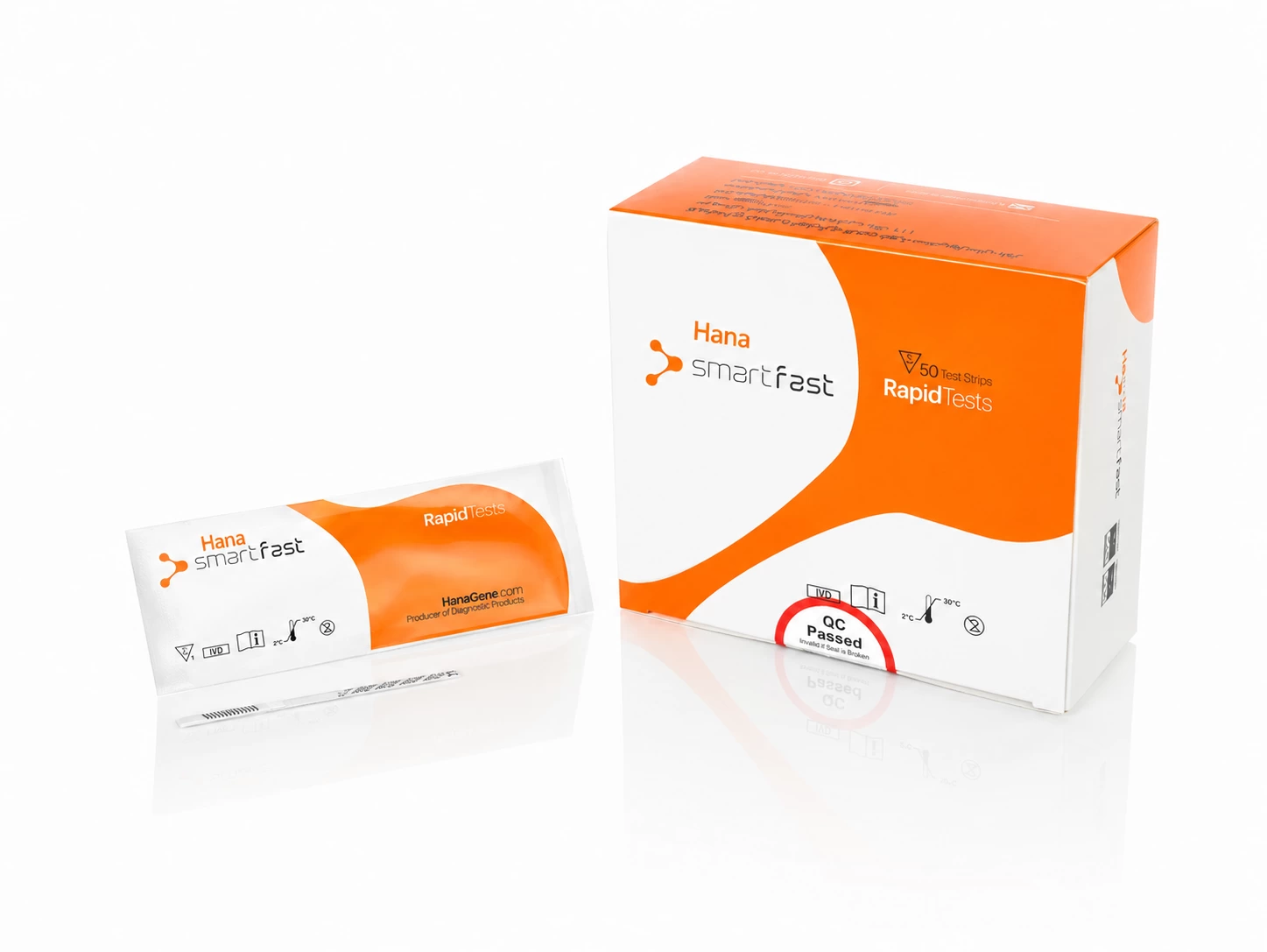
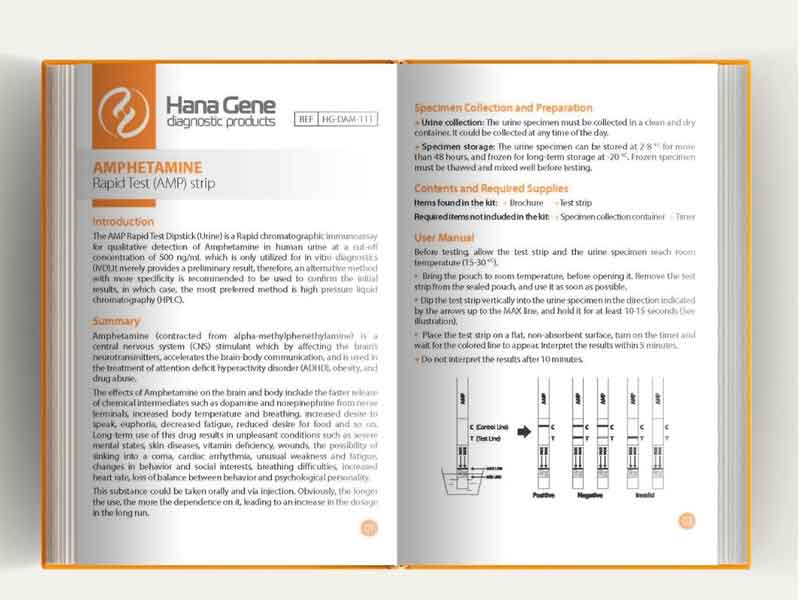
The AMP Rapid Test Dipstick (Urine) is a Rapid chromatographic immunoassay for qualitative detection of Amphetamine in human urine at a cut-off concentration of 500 ng/mL which is only utilized for in vitro diagnostics (IVD).It merely provides a preliminary result, therefore, an alternative method with more specificity is recommended to be used to confirm the initial results, in which case, the most preferred method is high pressure liquid chromatography (HPLC).
Summary
Amphetamine (contracted from alpha-methylphenethylamine) is a central nervous system (CNS) stimulant which by affecting the brain’s neurotransmitters, accelerates the brain-body communication, and is used in the treatment of attention deficit hyperactivity disorder (ADHD), obesity, and drug abuse. The effects of Amphetamine on the brain and body include the faster release of chemical intermediates such as dopamine and norepinephrine from nerve terminals, increased body temperature and breathing, increased desire to speak, euphoria, decreased fatigue, reduced desire for food and so on. Long-term use of this drug results in unpleasant conditions such as severe mental states, skin diseases, vitamin deficiency, wounds, the possibility of sinking into a coma, cardiac arrhythmia, unusual weakness and fatigue, changes in behavior and social interests, breathing difficulties, increased heart rate, loss of balance between behavior and psychological personality. This substance could be taken orally and via injection. Obviously, the longer the use, the more the dependence on it, leading to an increase in the dosage in the long run. The onset of action of Amphetamine is usually 2 to 4 hours after taking and its half-life in the body is around 4 to 24 hours. About 30% of the substance remains unchanged and the rest is excreted from the body through urine in a hydroxylated form. Amphetamine test is a rapid urine screening test which could be used without any equipment. In this test, monoclonal antibody is used for the selective detection of increased levels of the substance in urine. The concentrations of Amphetamine greater than 500 ng/mL indicate that the test result is positive.
- Function Method Basis
The Amp Rapid Test is an Immunochromatography method based on the principle of competitive binding. During the test, the urine specimen flows on the nitrocellulose membrane via capillarity action. If the Amphetamine level in the urine specimen is equal to or greater than 500 ng/mL, then it competes with the antibody conjugated with gold particles to bind to the coated antigen in the T area. And because all the binding terminals for the anti-Amphetamine antibodies are saturated, a colored line will not be formed in the test line region (T). If the level of Amphetamine in the urine is below 500 ng/mL, it does not saturate the binding terminals for the coated antibody particles. These particles coated with immobilized anti-Amphetamine are trapped and show a visible colored line in test line area (T). In order to have a procedural control, a colored line always appears in the area of the control line (C), indicating the appropriate volume of the specimen added to the membrane.
- Certain medications that may cause a false positive result
|
Antidepressants such as
Fluoxetine, sertraline, amitriptyline, Citalopram, amoxapine, Bupropion, desipramine, selegiline, trimipramine |
|
Synthetic opioid drugs such as
methadone, tramadol, etc. |
|
Pain relievers such as
acetaminophen |
|
Benzodiazepines
Diazepam, oxazepam |
|
Beta-blockers
Atenolol, acebutolol, bisoprolol, labetalol |
|
Cardiac medications
Amiodarone |
|
Antihistamines
Astemizole, bromodiphenhydramine, brompheniramine maleate |
|
Stimulants
Ritalin, dextroamphetamine |
|
OTC cold and allergy medications
Ephedrine, pseudoephedrine, phenylephrine |
|
OTC anti-obesity medications
Phenylpropanolamine |
|
OTC nasal sprays
Afrin |
|
Anti-asthma medications
Marax |
|
Other drugs
Isoxsuprine, ranitidine, ritodrine |
Certifications & Standards